
Since graduating from TIS in 2020, Sari has stayed true to the interests and values that first shaped her time at school, from community service and youth development to public policy and finance. After studying Philosophy, Politics, and Economics at King’s College London, she has gone on to build experience across finance, civic engagement, and media work in Macao, while continuing to invest in projects that support young people.
What motivated you to pursue a Bachelor of Science in Philosophy, Politics, and Economics at King's College London?
My motivation stems from the convergence of my community service and academic interests. During my secondary years at TIS, I was elected Head of the TIS Volunteer Team and accumulated hundreds of hours of volunteer work with vulnerable communities. This firsthand experience strengthened my belief that promoting social mobility is essential to a harmonious society. At the same time, my studies in Social Studies, Economics, and International Politics at TIS deepened my interest in how policies and political institutions shape the way societies function.
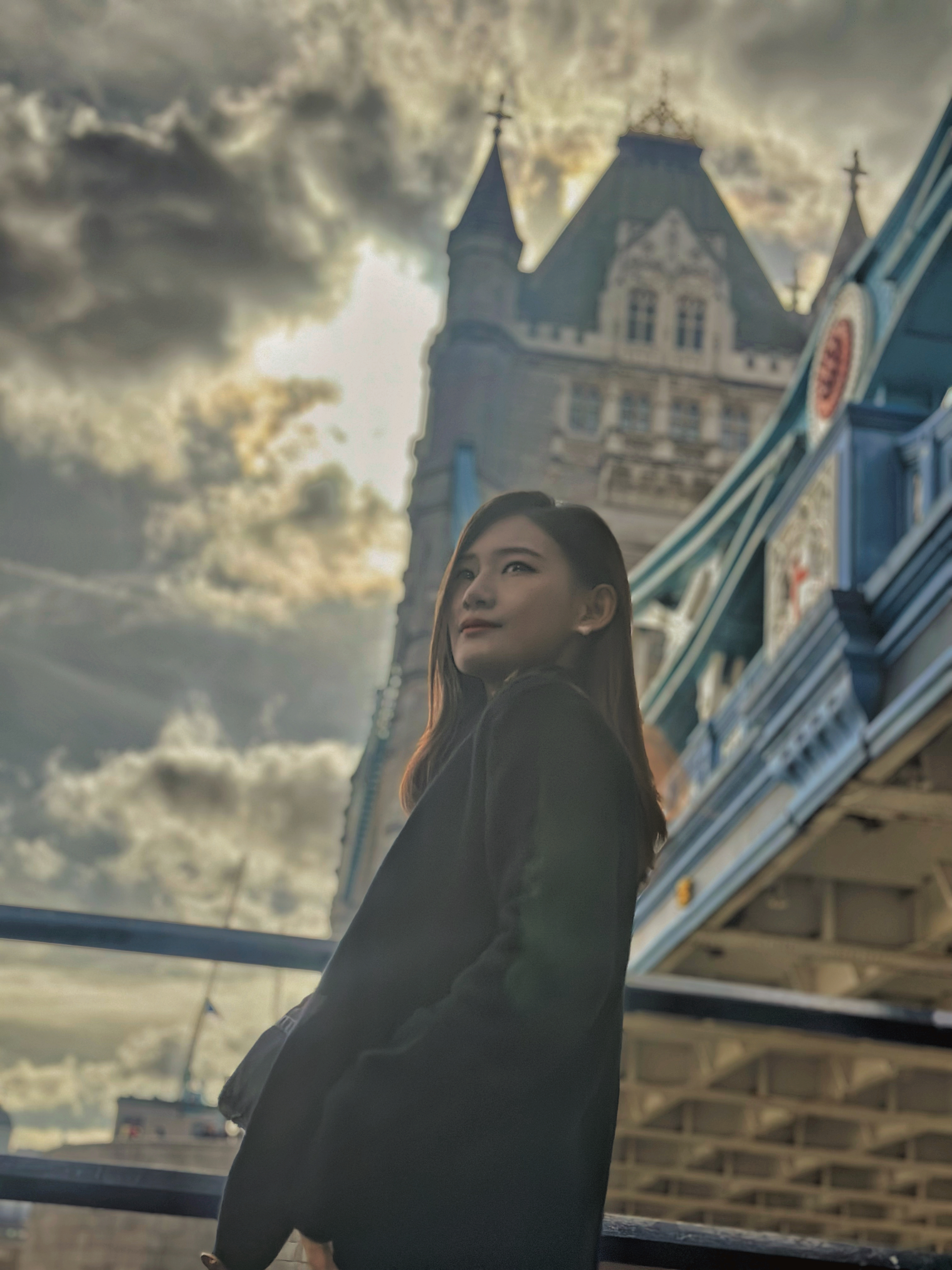
To deepen this understanding and gain multidimensional perspectives, I decided to study PPE at King's College London. The programme offers a uniquely interdisciplinary education that reflects the very connections I want to explore. I believe this integrated lens is essential to understanding the system of the world, and it is precisely what I hope to cultivate through the study of PPE.
How did your time at TIS prepare you for the challenges of studying abroad?
My time at TIS gave me essential foundations that shaped my outlook on life: intellectual confidence, self-discipline, and a spirit of curiosity and courage. Pursuing both the Alberta curriculum and the IB programme was genuinely demanding. These skills prepared me directly for university life in London, and beyond that, balancing a career in finance, youth affairs, and social services.
TIS offered a genuinely supportive environment in which teachers encouraged curiosity and initiative. This cultivated in me a willingness to explore unknown territory without fear, a quality that is indispensable when adapting to a new country and academic culture, and equally so when pioneering new projects, challenges, and opportunities in my career.
What inspired you to become involved in youth affairs during your high school years?
My involvement in youth affairs began with a simple observation: when my classmates and I were choosing our high school courses, many of my peers struggled because they had not yet seriously thought about our future careers. This made me realise how essential information, guidance, and inspiration are for young people. That realisation prompted me to start the Personal Development and Policy Investigation Group in Grade 12. Together, we examined youth development policy and advocated for helping young people plan their careers and access more internship opportunities.
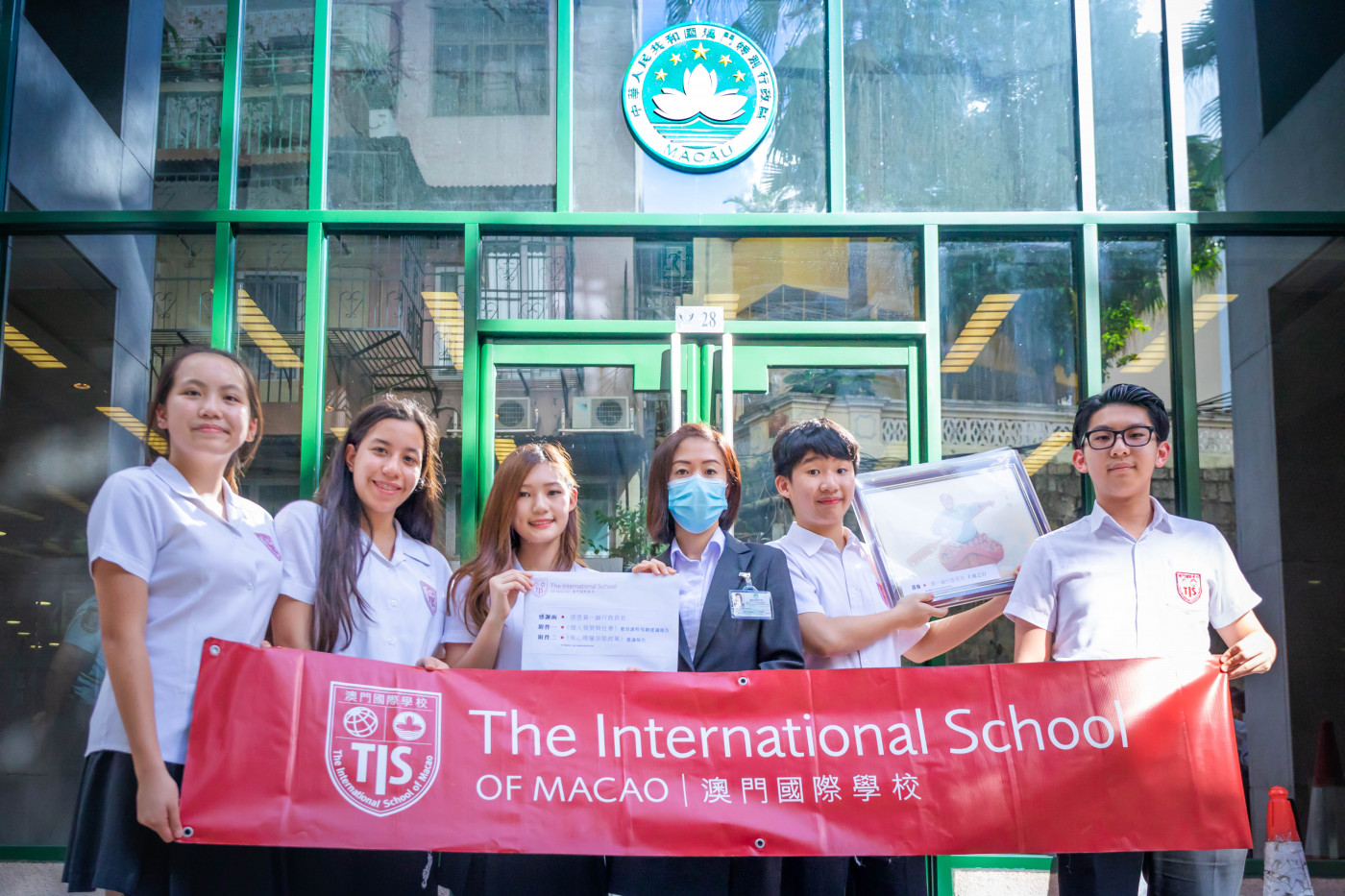
Leading the group was both a privilege and a learning experience. Through voluntary tutoring and surveys that captured the perspectives of Macao's youth, we sought to foster personal growth and a strong sense of civic responsibility. Together, we visited the office of Macao's Chief Executive to submit an Education Policy Recommendation Report, which focused on improving the youth career ladder, and advocated for teaching students from kindergarten through secondary school on moral responsibilities toward family, society, country, and the world.
I believe that youth are the future of society, and that if we nurture their aspirations with care, we can unlock extraordinary potential. TIS gave me the platform, the teachers, and the confidence to take those first steps from awareness to action.
Could you elaborate on your experience leading the "Youth Leadership Program"? What were the key takeaways for you and the participants?
I launched the Youth Leadership Programme in 2022, and it has since grown into an annual initiative of the Youth Association of People. I initiated, planned, and coordinated the programme, which brings together a diverse group ranging from secondary students to doctoral candidates and working professionals. Through mentoring, workshops, and project-based tasks, we guide participants in discovering their strengths, setting meaningful goals, and understanding what true leadership really means.
The core purpose of the programme is to encourage young people to become more active and engaged in society and, more importantly, to help them find their life goals.
My hope for the programme is that participants come away with one key realisation: leadership is built on perseverance, responsibility, and service to others. Finding one's life goal, and then motivating and gathering peers who share the same sense of mission and vision, is the foundation of it all.
Self-affirmation is the anchor of growth. When young people believe in themselves, they develop the courage to explore, to persist, and to lead.
How does pursuing a Master of Science in Global Finance and Banking align with your career goals?
I am pursuing an MSc in Global Finance and Banking to strengthen my capabilities and, hopefully, to contribute meaningfully to Macao's economic development. Macao is currently undergoing an economic transition, and the government is making significant efforts to support this shift. To contribute to this, I need both hands-on banking experience and rigorous academic grounding.
In my current role in the financial industry, I have worked on government-focused financial services, digital transformation, and cross-border financial strategy. I have also contributed to key research initiatives: one on technology-enabled stock trading reform, another on investment opportunities and risk analysis for Chinese enterprises operating in major Lusophone countries, as well as the development of cross-border financial services strategies. The MSc will provide what experience alone cannot, such as the analytical frameworks that turn instinct into evidence-based judgement.

My goal is not simply career progression, but to give back to Macao by helping build a more diversified and resilient industrial ecosystem, one in which young people can become builders, not just beneficiaries, of the city's future. That is the ecosystem I want to help shape, and where my commitment to youth development finds its purpose: creating opportunities for those who, like me, believe in an optimistic future here in Macao.
As a member of the Macao SAR Youth Affairs Committee, what are some of the issues you are most passionate about addressing?
As a member of the Macao SAR Youth Affairs Committee, I am deeply passionate about youth development, from career planning and employment to mental health and moral education, and helping young people understand national and international trends so they can position themselves wisely.

Career planning matters because the choices come so early. In secondary school, students already select subjects that shape their university options and, ultimately, their careers. This is a life-changing decision made in middle school. Young people therefore need to be well informed about the world, so they know what they want to become, and they need inspiration from experienced adults who can help them decide well.
Youth employment is next. How can young people find and grasp opportunities, and how can the environment itself foster them? This is why I focus on Macao's "1+4" economic diversification strategy, opening more doors in emerging sectors such as technology, traditional Chinese medicine, cultural tourism, and modern finance.

Youth participation in public decision-making is the third. Young people are not passive recipients of policy; they are co-creators of the future. Macao already offers many platforms for youth voices, and young people need to learn how to use them effectively, expressing their views and offering constructive suggestions. By empowering them to participate, we nurture a generation that is more confident and more committed to the common good.
Young people are our future. If we invest in their hearts and their sense of purpose, a brighter Macao and a brighter nation will not be something we merely wish for — it will be something we help them build.
Looking back at your achievements, what moments stand out as particularly meaningful or transformative?
At the core of everything I do is a simple wish: to become someone whose work truly matters and who can give back to society in a meaningful way. I am grateful to have had that chance through social work with organisations like the Aliança de Povo de Instituição de Macau and the Youth Association of People.
But when I reflect on the past, the moments I treasure most are the quiet ones. It is the late night message from a young person who is struggling, and they think to reach out to me. It is the chair pulled up beside me, the gentle question they are almost too afraid to ask, trusting that I will listen. It is the hand of someone from a minority community closing around mine, warm and certain, thanking me for simply being there. And it is the look in their eyes when hope returns, the way their face softens and lifts, as if something heavy has finally been settled.
That is what makes this work meaningful. It is not about the title, but about holding a light for someone in their darkest moments. Not about being noticed, but about being part of the change that brings hope back into their eyes. And I am simply grateful to stand in that light, to share that hope, and to help carry it forward.
What advice would you give to current TIS students who aspire to make a difference in the community?
My advice is simple: don't wait until you feel ready. I learned that at TIS, and it has stayed with me ever since.
If you truly want to make a difference, focus first on becoming someone of real value, someone with something meaningful to give. That doesn't happen through thinking alone. It comes through action, through volunteering your time, listening sincerely to others, and paying close attention to the needs around you. It also comes from reading widely and building ideas that are truly your own. That is how you come to understand society, and that is how you begin to see where you might improve it.
A single word of encouragement, or one small act of service, can change someone's entire path. Along the way, it might even reveal your own direction.
So make the most of everything TIS has to offer. A dream only becomes real when you act on it. Aspirations are the blueprint of your life, and the time to start is always now, not when you feel perfect or fully qualified. Your questions, your ideas, and your service matter far more than you know.
Did you have any teachers/staff at TIS who influenced you?
Absolutely. Some teachers shape your thinking, and a rare few change how you see yourself. For me, Mr. Dominic Masters was the latter. He treated me as a student of great promise, not because I was flawless, but because he chose to see what I could become. His belief was so natural, so consistent, that I slowly began to believe in myself too. It gave me the courage to dream without limits, and it has stayed with me ever since.
Mr. Martin Brown was equally influential. Every time I brought him an unconventional idea, he welcomed it warmly and supported every out-of-the-box idea I brought to him. He never made me feel that my thoughts were too small or too strange to pursue.
And Ms. Doina Tonner probably remembers me differently: the student who kept asking “how to get a 7”, and staying after school with questions that I simply could not let go of. I must have been quite a handful, yet her patience never ran out. And through that patience I learned something I have never forgotten: learning is not handed to you, it is something you chase until it becomes your own.
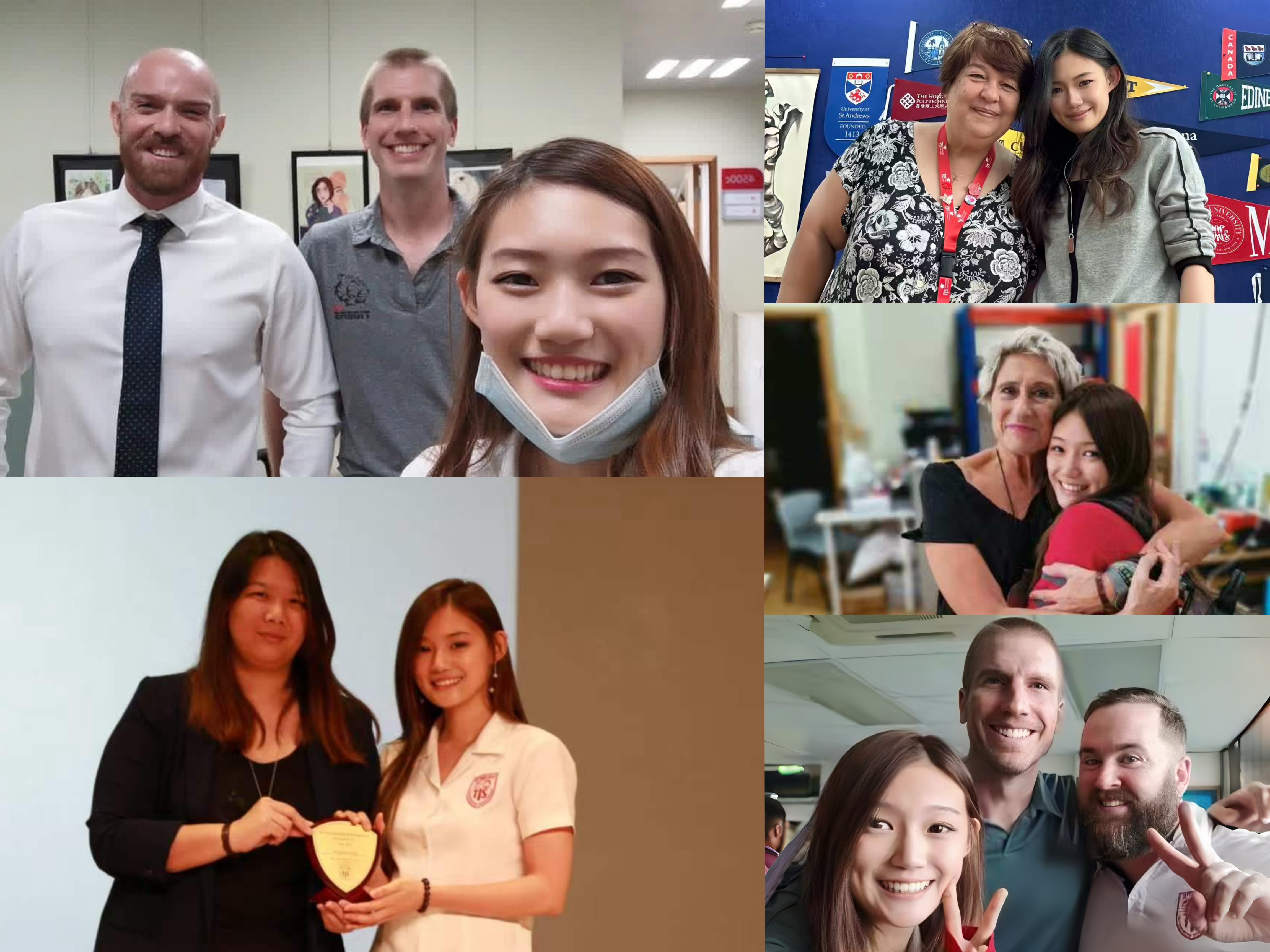
What teachers at TIS shared was an endless willingness to listen. They never tired of my questions, and every time I asked how I could improve or reach the next level, they responded with encouragement and belief. Their words carried quiet power. A simple "You can do this" or a trusting glance was enough to make me feel capable of extraordinary things. That confidence taught me to step into unfamiliar territory without fear, which has been invaluable in adapting to new countries, academic cultures, and professional challenges.
TIS taught me that education is not only about delivering content. It is about inspiring character, confidence, and a sense of responsibility toward others. That is the greatest gift TIS gave me.
What makes you proud to be a TIS alumni?
I am proud that TIS is not just a school of academic excellence, but a community that nurtures character, innovation, and a sense of purpose. TIS was where my curiosity took root, and my sense of purpose first found its voice. It was where I learned that education is not only about grades, but about character, community, and the courage to ask, "How can I make things better? How can I innovate?"
That spirit of daring to think differently and create new solutions has guided every step of my journey. It taught me to ask not only "what can I gain" but "how can I contribute". It gave me an international perspective while deepening my attachment to Macao. In my speeches and columns, I have often said that education's core mission is to cultivate people who are capable of creating value rather than merely consuming it. TIS did exactly that for me.
I am proud to be one of its many fruits, and I am grateful that TIS has given me the foundation to dream big and serve with purpose.
